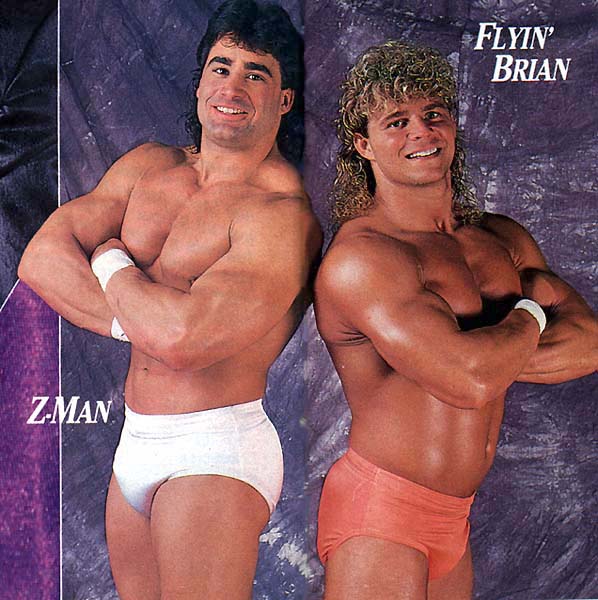
Tom Zenk's Match History for January to July 1990 (here) outlined how Ole Anderson, following his appointment as NWA chief booker in May 1990, disbanded the highly successful tag team of The Z-Man and Flyin' Brian and began to pressure the younger contracted talent - and Tom Zenk in particular - to quit the NWA. The article below provides a more detailed account of the lead up to and immediate after effects of Anderson's appointment. Next week we present Tom Zenk's match history for the second half of 1990 to the time of Anderson's sacking in December, 1990.
January to May 1990Tom Zenk had been recruited into NWA in mid 1989 by Jim Barnett acting as a go-between for Jim Herd and Ric Flair. It was Flair who really wanted Zenk in the NWA. Herd asked Barnett to act as an intermediary. Zenk had been touring with All Japan Pro-Wrestling for 2 years and was performing with a tough and aggressive Japan style. He used his exisiting commitments to AJPW to parlay NWA's initial offer into a two year contract, (a year longer than most wrestlers were being offered at the time). The NWA's offer included a promise to make him one of the organization's top five 'babyfaces.' This promise, the two year security and the six figure salary were attractive enough to convince Zenk to take the risk. It meant losing face with Joe Higuchi, the referee who had been Shoehi Bab's intermediary and it meant burning a bridge with Baba and AJPW - but Zenk trusted Herd and Barnett.
However, no sooner were the papers signed than it became clear that, promises notwithstanding, those further down the line at NWA had no real plans for Zenk.
 |
|
|
The best 'gimmick' the NWA could come up with was to debut him as "The Zodiac Man" a caped crusader throwing star-signs to the audience in much the same way as "The Candyman" later distributed candies. Zenk quickly vetoed the idea. He debuted instead as 'The Z-Man' with no costume - just plain white trunks. For his debut, 9/12/89 at NWA's Clash of Champions ("Fall Brawl '89") Colombia, SC, Zenk was booked against The Cuban Assassin, David Sierra. Zenk regarded the debut as essentially a 'dud match.' Sierra called the match but didn't do much calling or flying around. As Dave Meltzer observed at the time - "Nobody 'knew' Z-Man and he just showed up out of nowhere with no build up" Things were made worse when Ross and Cornette pulled a "Who is he routine?" in their commentary. Since a great number of people recognized Zenk, this was simply insulting the fans. For Meltzer "It was too routine a performance for a debut match ... Zenk has the potential to be a star here, but only if he's spectacular in the ring." Despite all their promises, the NWA had done nothing to provide Zenk with an auspicious beginning in the promotion.
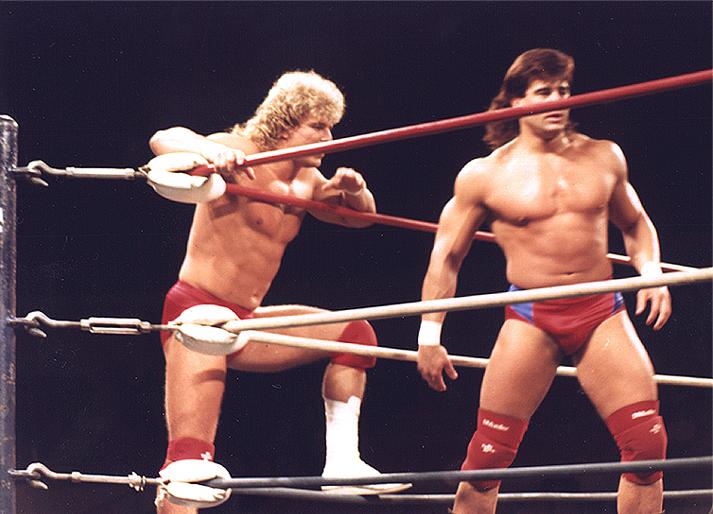
Things began to improve in January 1990 following a reshuffle of the booking committee.The new committee, which operated from January to March 1990, comprised Jim Ross, Kevin Sullivan, Ric Flair, Terry Funk and Jim Cornette. Ole Anderson was out, and Jim Herd and Jim Barnett were no longer taking as active a role in booking decisions. The power now lay with Flair, Cornette and Sullivan in terms of putting matches together, with Ross and Funk in production of the TBS and syndicated television shows respectively (WON 2/1/90).In December 1989, Flair had seen the potential of teaming Zenk and Pillman and while Flair was chief booker 'The Z-man and Flyin' Brian' received a solid push. By late January The Wrestling Observer Newsletter (1/22/90) was reporting "Zenk and Pillman are looking way better as a team than anyone expected.... Rock'n Roll aren't going to cut it this time around. Zenk and Pillman fit the same niche and are younger, fresher looking and tons better in the ring to the fans."
After several months of build up, Tom Zenk and Brian Pillman won the finals of an 8-team tournament, on 2/12/90, to become the United States Tag Team Champions.
Meanwhile Flair, who now dominated the booking committee, was using his position to push himself with matches over the younger talent.
In late January, early February, Zenk was booked for two matches against Flair. In the first (in Greensville, 1/23) Zenk outshone an old and lackluster Flair. After a confusing start, with both men playing face, the crowd was backing Zenk. Apparently frustrated and seeking crowd support, Flair backed Zenk into the turnbuckle for a series of trade mark slaps to the chest. These were delivered so stiffly that they cut Zenk's chest and drew blood. Out of character, Flair turned heel, using Zenk's trunks to reverse a cradle for the pin. In their second match (2/4 Texas) Flair played heel from the start and called the match. The two men never met in singles ring action again. On 2/17 Flair booked himself to win over the smaller Pillman. Pillman, as Flair's protege and always anxious to please, worked more actively than the independent Zenk to put Flair across. As a consequence of their performances both Zenk and Pillman became the top candidates for the Fourth Horseman spot (WON 3/5/90) though Flair favored Pillman as the smaller, more pliable man.
By this time, Flair was under increasingly heavy criticism for booking matches to make himself look good. The practice was beginning to cause morale problems among the rest of the workers. The Observer, generally sympathetic to Flair, noted - "Part of the problem from [the] management side is that the [booking] committee all consists of active performers and the ego problems are another can of worms. ...Let's just say for example that the booker of the NWA [i.e., Ric Flair] was also potentially its biggest drawing card ....and he pushed himself. Those underneath...will still complain and point out the weaknesses. Then you have a management that joins in and yet the guy is still being pushed as the top guy while everyone tries to shoot him down." (WON 2/26/90).In response to increasing criticism, Flair resigned as NWA booker in the first week of March. Jim Herd and Jim Barnett began to take a more active role in booking decisions.
Meanwhile, The Z-Man and Flyin' Brian had been generating considerable heat across the country defending the US Tag Team Titles against the Freebirds and later the Midnight Express (Stan Lane and Bobby Eaton). Zenk and Pillman actively sought more work with the Midnights since it was readily acknowledged that Bobby Eaton was among the best workers in the circuit. However the Midnights and their 'manger' Jim Cornette were already struggling to save their spots within the organization.
The heat in a feud being developed between Zenk, Pillman and the Midnights increased markedly following a match on 2/28 in Altoona, PA (broadcast on 3/10) when an interesting new twist was introduced. Towards the end of the match, Zenk went for his trade-mark sleeper-hold finisher on Lane. Cornette interfered, hitting Zenk with a 'loaded' tennis racquet. Zenk was thrown from the ring while Lane, Eaton and Cornette triple-teamed Pillman, 'injuring' his throat with the racquet and 'stealing' the tag belts. The fan reaction was enormous.
|
"The
angle with Zenk and Pillman on 3/10 [broadcast date] was fabulous. All
the men involved deserve a round of applause ...This was the best angle
in the NWA in a long, long time and the extra touch of unnecessary violence
was really appreciated" - Letter to the Wrestlng Observer Newsletter
- 4/2/90
|
The new booking committee, however, decided against pushing the Pillman-injury angle, arguing that they didn't want to play up damage to internal organs or exploit Pillman's throat problems as a child.
This was later recognized as a major booking mistake since the effect was to tone down the heat in a very promising angle. "Zenk and Pillman vs Midnights had a hot angle, but most of the heat was killed in the boardroom and the rest of the heat was done away with this weekend when Zenk and Pillman [were booked to steal] .... the belts back " (WON 4/2/90)
In fact, the Committee's decision to tone down the angle reflected a reluctance to increase the profile of Jim Cornette and the Midnight Express. By March Jim Crockett had resumed some kind of power role and the booking committee now comprised Crockett, Jim Herd, Jim Ross, Jim Barnett, Jim Cornette, Kevin Sullivan, Wahoo McDaniel, Jody Hamilton and Terry Funk. As a former ally of Flair,Cornette's influence was in rapid decline as was that of Kevin Sullivan. In fact, The Observer (2/4/90) noted "Cornette is fading from the company at this point..."
The mistake of downplaying the Pillman-injury angle became apparent in New York on 4/26 when Zenk and Pillman defended their tag titles against the Midnights in a straight title defence. With all heat now removed from the feud, the hard core Meadowlands crowd supported the challengers and booed the champs. Nonetheless, both teams turned in a four star performance with Zenk and Pillman successfully defending the belts.
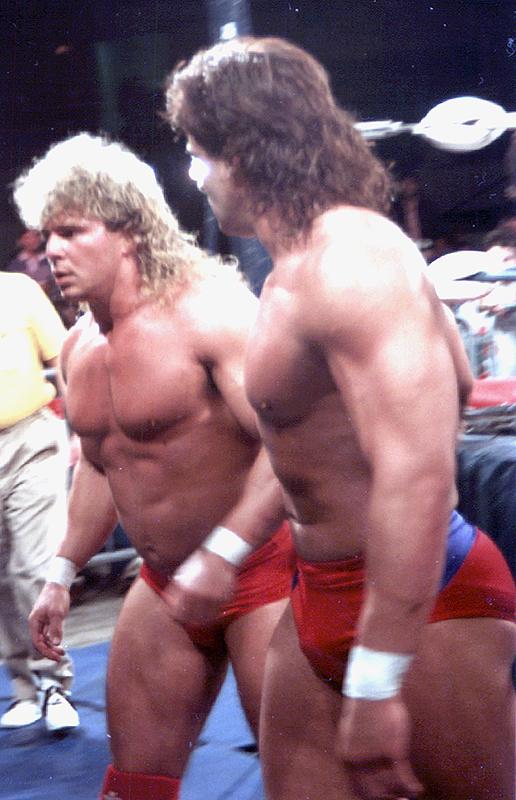
East Coast audiences, in particular New York and Philadelphia crowds, were recognized as having 'seen everything' and being openly hostile to 'faces'. (According to Jessie Venture "They boo even Santa Claus in Philly!"). Shane Douglas and Johnny Ace had received similar treatment earlier on the same card and Zenk was to receive a second dose later in the evening when he subbed for Ricky Morton in a match between the Rock'n Roll Express and Freebirds. Zenk's response was (a) philosophical - "You don't swim upstream. They chuck lemons ... you make lemonade. I was making money. They'd paid for their tickets and could shout whatever they liked" - and (b) professional "You don't let the crowd lead the match. When they shout 'boring' grab a headlock and hold on to it and really bore them. Then give them a high spot. You lead the match. You control it at your pace. Otherwise you get carried away and make mistakes."
Nine days later (5/9) in Syracuse, NY, the U.S. tag champions turned in another four star performance in a successful title defence against The Wild Samoans . A series of matches against the Samoans began to rekindle some of the heat lost from the Midnight Express feud. By this time the Midnight Express were having serious problems renegotiating their contracts, problems that were only resolved within days of the "Capital Combat" PPV.
May to July, 1990- the 'Ole Factor' comes into play.
Then, in the first week of May, 1990 the NWA formally announced the selection of Ole Anderson ('Rock") as new NWA chief booker over candidates such as Bill Watts and Dusty Rhodes
The booking committee, led by Flair, which had ousted Anderson in January 1990, had considered him too old to be wrestling and removed him from active ring work in February 1990. His unsuitability for continued ring work had been made clear for all when the Freebirds - settling an old score - 'blew him up' in a match in Dayton, Ohio.The Observer (2/26/90) welcomed the Committee's decision, commenting that while "Ole is awesome in interviews ... [we] wish we didn't have to watch him wrestle." In normal circumstances Anderson should have faded out to make way for younger talent. Indeed an 'I Quit" match had been booked between Scott Steiner and Ole Anderson that would have ended Anderson's career. But the match didn't take place. Instead, in an unexpected twist, Anderson was back and bitter and apparently gunning for what WON described as NWA's "stable of experienced top quality workers."
In the same edition that announced Anderson's appointment, The Observer warned its readers, with astonishing accuracy - "Expect .... Tom Zenk to be putting guys over with Anderson as booker" (5/21/90).
Anderson apparently believed that, Zenk, with his 'defection' from WWF and supposed 'nomadism' in AWA, PNW, Japan, etc., was 'footloose' and possibly a 'quitter' - a 'weak link' who could be forced out if enough pressure was applied. "It was like a domino. Break one and all will fall."
"Putting other guys over" or jobbing talented to less talented workers was a recognized method of pressuring a wrestler out. 'Jobbing' took heat away from a star and often demoralized him. In April, Shane Douglas had left NWA rather than continue losing heat by putting Mark Callas over, arguing that "If you lose too many matches on TV millions of people see it. After a while, people stop following you."
The first clear sign that Anderson was specifically targetting Zenk came when Zenk was reported 'injured' on 5/12 in a Detroit match and was replaced (by Paul Drake) for a scheduled 5/13 return match with Pillman against the Samoans in Chicago. Zenk had in fact 'no-showed' the Chicago match to return to Minneapolis for family reasons. Anderson retaliated with an unprecedented $2,500 fine. As the Observer Newsletter commented "Since no-showing at that time, and even now, was a somewhat frequent occurrence without fines anywhere near that level, Zenk's lawyers protested to management" (WON, 8/20/90). Zenk's attorney had business connections to Ted Turner and the matter was quickly resolved in Zenk's favor. Jim Herd warned Anderson to back off. Anderson complied, but only temporarily.
Anderson's next move was to require all NWA talent to relocate to Atlanta. Under Zenk's contract the company had undertaken to fly him home to Minneapolis whenever he had two clear days in the booking schedule. Anderson revoked this in the hope of applying additional pressure.
Zenk and Pillman had been employed under a contract system introduced by Jim Herd. Herd believed in picking winners and making long term investments in them. Anderson, on the other hand, believed that long term contracts gave too much security to the wrestlers and too little power to the bookers.
The young talent in NWA saw their contracts as a reward for years of hard work in the journeymen ranks. If they owed loyalty to anyone, it was primarily to the company and men like Herd and Barnett who recognized and nurtured their talent. They owed nothing to Anderson and generally regarded him as an uninspirational old-style manager who rewarded cronyism rather than talent and hard work. In short, they weren't 'Ole's guys'
For his part, Anderson believed he could make a star out of anyone and regarded talent like Zenk and Pillman to be interchageable with that of Gibson and Morton or Rich and Landell - depending on who he chose to push. And since Morton and Gibson were available at $75,000 why pay Pillman and Zenk twice that amount to stay around? In Anderson's reasoning it was a two for one sale. For one of their salaries he could get two of his guys and push them in their place.Anderson began to recruit older and cheaper talent under less secure conditions of employment - men who 'owed Anderson from before' - in short, 'Ole's guys,' who could be relied on to be pliable and loyal because Anderson had the power to make or break them. The names he recruited included Paul Orndorff, The Iron Sheik, Buddy Landell, Bob Orton and The Junkyard Dog. The Observer noted - " It appears we are going back in time, about eight-to-ten years to be exact, with the return of all the "old favorites" with the emphasis on the word old and not favorites. Looking at the whole thing collectively it isn't a good sign.... " Letters to The Observer criticized Anderson for "emptying the old grapplers' home." and talked of a "Seniors Tour" in the "Nostalgia Wrestling Alliance."
 |
 |
|
|
|
Stepping up the pressure on Zenk and Pillman, Anderson now booked them to drop the US tag belts to the Midnight Express at 'Capital Combat', May 19, 1990. Zenk and Pillman responded by turning in a performance that ranked among the top ten performances of 1990. Their tactic was to make it glaringly obvious to everyone, through their perfromance, what was going on in the NWA.
The Observer reported - "Midnight Express won the US Tag team titles from Tom Zenk and Brian Pillman in 20.19. Jim Cornette was placed in a cage at ringside ...Pillman's chest was all bruised up before the match even started courtesy of working most of the past week with Flair. Good fast action all the way. In some spots the guys seemed slightly flat, I would guess because of the heat [no air conditioning]. Still, it was the best match on the card. Zenk and Pillman did most of their best moves early. Midnights gained control when Pillman missed a tackle at the 10 minute mark and they worked him over for most of the rest of the way. ... Midnights did their usual hot moves, including two or three new ones while working Pillman over. The hot tag to Zenk was the biggest pop live of the entire night. After Zenk kicked out of the rocket launcher and Eaton missed a tackle into the corner, Zenk put the sleeper on. It turned into a four-way and Lane gave Zenk an enzuiguiri (karate kick to the back of the head, although it looked more like the upper back) and Eaton cradled Zenk for the win [*** and three quarters.] "
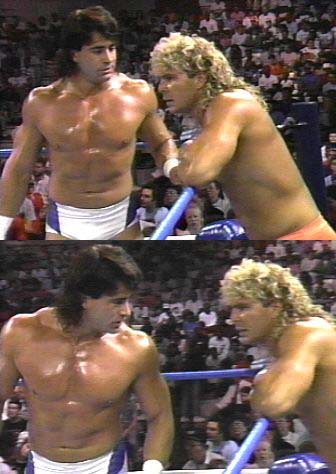
Within weeks, despite their good showing, the highly successful tag team of "The Z-Man and Flyin' Brian" had been disbanded by Anderson while Morton and Gibson were being pushed in their place.
 |
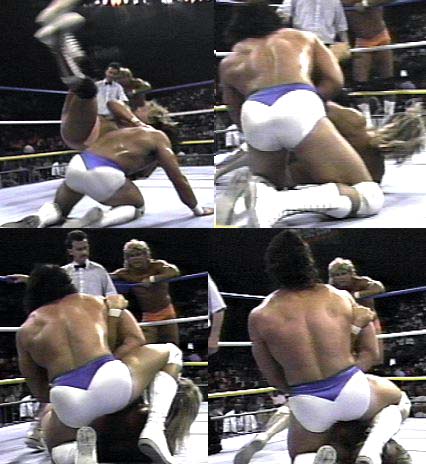 |
With Anderson's intentions now clear and Zenk refusing to quit ('until hell freezes over') Anderson began jobbing him out to an endless succession of 'hot heels' (Vader, Hansen, Vicious, Callas, etc). The Observer reported (6/25/90) that "Morale is pretty bad because everyone is so unsure of what their spot is." By June, Pillman - despite his friendship with Flair - had joined Zenk in jobbing to Callas, Vicious and others. Zenk and Pillman were now receiving dramatically less push than the veteran Tommy Rich though "the fans have been rejecting Rich since his return last summer.' The Observer (6/4/90) reported that there "appears there will be a renewed push for Tommy Rich, while Tom Zenk, Norman and Cactus Jack don't appear to be seeing a whole lot of push. .... Pillman [is] booked mainly with the Iron Sheik and Mean Mark. That could mean lost in the shuffle but it may mean being shuffled to the bottom of the deck, but [it] doesn't look like he'll be keeping the high face spot either."
By mid June, Mick Foley had had enough. The Observer (6/18/1990) reported "Cactus Jack finished up on Sunday night in Sunrise FL. Ole Anderson was going to job him out so he decided it would be best to quit. It appears both Brian Pillman and Tom Zenk are going to be phased down and out respectively" - with more than a year left to run on their contracts.Though split up for their next PPV appearance (6/13 Clash of Champions - 'Coastal Crush' - Citadel, Charleston, SC) Zenk and Pillman continued to put in solid professional performances. Zenk unexpectedly found himself partnering Mike Rotunda against the Samoans without the benefit of any storyline. Zenk and Rotunda won in 5.27. Dave Meltzer reported - " Finish saw Rotunda thrown over the top rope behind the ref's back. Fatu then gave Zenk a Samoan drop and splashed onto him off the middle rope. Rotunda then pulled Zenk out of the ring behind the ref and Fatu's back and switched places. When Fatu picked Rotunda up, Rotunda 'surprised' him with a cradle. Good finish." Pillman was booked against Mean Mark Callas and lost. Having missed a spot he received considerable criticism. The Steiner Brothers, also under considerable pressure from Anderson, showed the strain and fought openly with him backstage. The Steiners had expected to retain their belts at Clash but were instead booked to lose them to Doom. They rewarded Anderson with a not very clean finish.
After "Coastal Crush" Anderson removed Zenk from the booking schedule for almost a month while hiring two new 'faces' - Tim Horner ('The Star Blazer') and Brad Armstrong ("The Candyman"). Both these men had worked for Anderson before and were willing to come in at cheaper rates. Anderson told Zenk he had nothing for him, expecting him to 'take the hint.' But it was summer, Zenk had an empty schedule and the checks were still rolling in. So he didn't take the hint. He reportedly told Anderson "Thanks for the time off" and went home to spend June on the sun-deck.
With the alleged no-show, the fine, the engagement of lawyers, the loss of the tag belts, the disbanded tag team, the enforced spell away and a squash to Vader booked for July - this must have been an extremely stressful time. If Zenk had time to reflect on the first two months of Andersons' tenure, it must have been clear what was to come for as long as Anderson was booker - reduced bookings (Zenk was absent from NWA cards from 6/13 to 7/4) and an increasing number of losses (50% of all matches).
Returning to NWA in July, Zenk hung on despite continuing pressure and harassment from Anderson. He found support among some of the veterans, including Harley Race who told Zenk - following a match where both men had worked to put each other over - "If you know how to work, they can never kill you off. And kid, you know how to work. Don't ever forget that. Keep taking what you have to take and do what you have to do - but never quit."
"Taking what you have to take" now included being booked to put over Vader at the Great American Bash '90, Baltimore Arena, Baltimore, MA on 7/7. NWA contracts stipulated that all finishes were final. If Zenk refused the match precisely as it had been booked, then Anderson finally had grounds for termination. Zenk took the match and worked to buff his body to make it obvious they were deliberately crushing one of the top babyfaces instead of using a jobber. Wrestlers and smarts, at least, would know what was going on.
The match was scheduled to last just over 5 minutes but after 2 minutes Anderson gave the signal to 'go home.' Again, this was a recognized way for a booker to humiliate a worker by screwing the match. As The Observer reported (box below), with no time for the match to develop, it simply became a squash.
The Wrestling Observer Newsletter reported - "Big Van Vader pinned Tom Zenk in 2:16 with a big splash. There was interest in seeing Vader from the tv clips, and he got a babyface reaction coming down the aisle, especially when the fans saw the headgear blowing steam. Crowd was quiet once the match started because they couldn't work out if Vader was a face or heel. Zenk sold his stuff good and he did some elbow drops and falling moves that got over because of his weight. But because of the time, this was really just a squash " half *. |
Summary
In the old-style regional federations, personal 'loyalty' and subservience to the booker/promoter had always been the key to survival. In mid 1990 Anderson was trying to resuscitate this old-style atmosphere in the NWA stacking it with middle aged wrestlers ('Ole's guys') who had grown up in the old federations, were cheap, expendible and above all knew their place. In this context young wrestlers like Pillman and Zenk, who owed Anderson nothing and hoped to get on through talent and hard work rather than partonage and cronyism, were regarded as 'too independent', 'too expensive', 'troublesome' and even 'rebellious'.Tom Zenk, after years of hard work and independence, having finally scored one of wrestling's glittering prizes - a secure two year contract with a six figure salary - now found his career actively and arbitrarily undermined for reasons unrelated to his talent or work rate. It was a stressful time but Zenk struggled to keep the stress out of his ring performance. When things seemed particularly grim he adhered to Harley Race's advice and his own natural instinct to " take what you have to take and do what you have to do - but never quit!"
It goes a long way to explaining Zenk's capacity to withstand Anderson's onslaught (and Anderson's resulting anger and frustration) that Zenk never regarded wrestling as a matter of life or death. If Anderson refused to recognize his talent and instead "beat him like a rented mule" Zenk was prepared to take it on the chin and smile, as long as the checks kept coming in, If he needed reassurance about his ring abilities, he could turn to veterans in the business like Race, Herd and Barnett. Or simply listen to the crowd decibels as he entered an arena. And after the matches there were always the parties. He may not have been NWA's current pushed 'star' but in the bars and at the parties, the crush was always around him and around Pillman - not Flair, and never Anderson. He and Pillman could still put up more numbers than any of the 'pushed' wrestlers.
There was, after all, more to life than wrestling.
Part 2 - Tom Zenk Match History - July to December 1990. After Ole's sacking, Tom Zenk wins the TV title.
to the complete Tom Zenk Match History, January - July, 1900 back to main page
